
What does it mean when the President cares little who is killed?
By Bill Fletcher, Co-Founder of Standing for Democracy and a long-time trade unionist, international solidarity activist and writer.
February 3, 2026
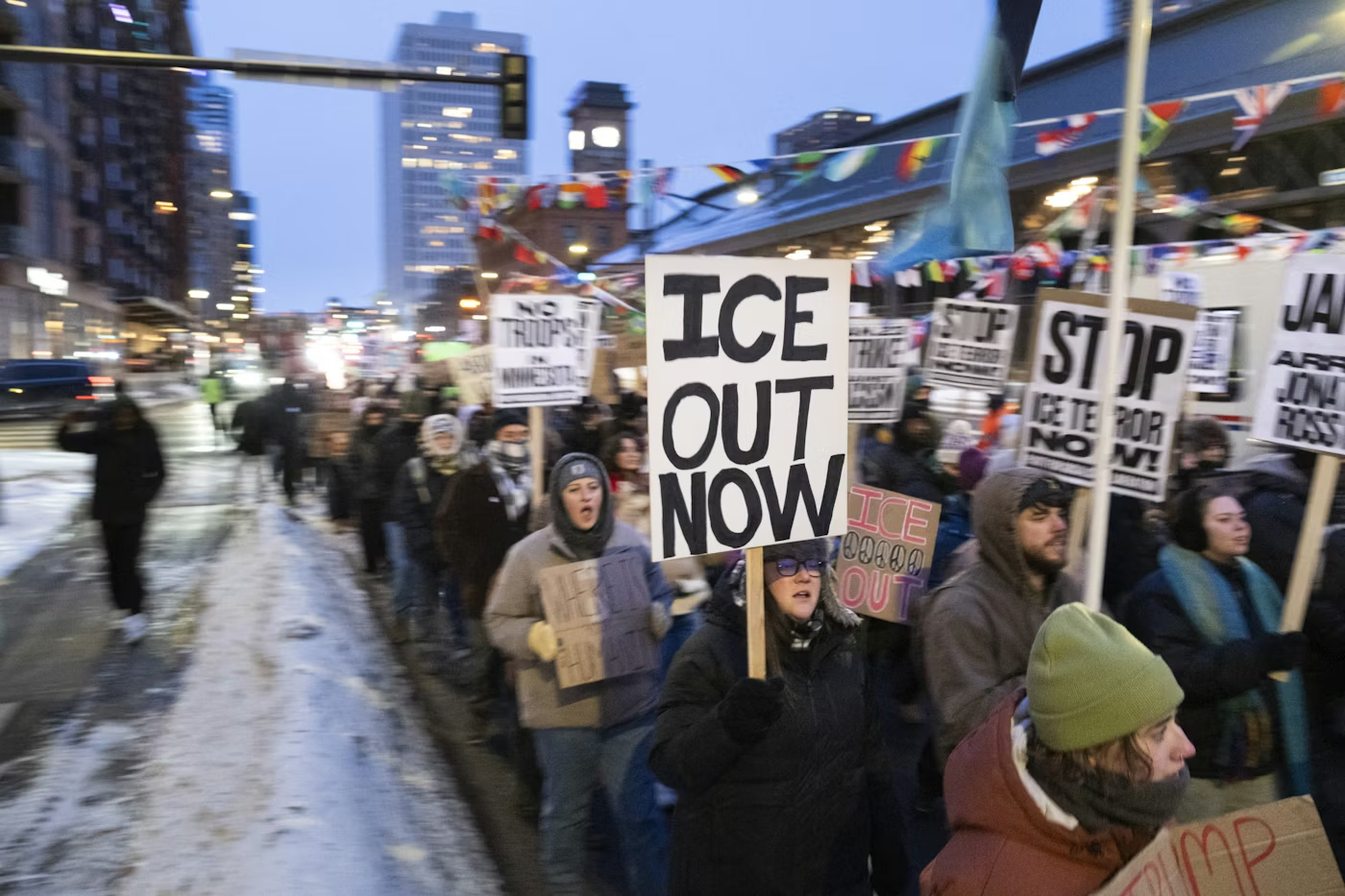
Roberto Schmidt/Getty Images
On January 23, Minneapolis residents reflected the best of the U.S. They spoke up and publicly rejected repression, shaking up the political environment.
We must grapple with a problem. A problem that has become patently obvious. In the aftermath of the killings and non-lethal abuse in Minnesota by personnel from the Department of Homeland Security, it is clear that the Trump administration is not moved by the loss of civilians. The quick, cold replies from the Administration in defense of the brutal actions by Homeland Security personnel have become an expected response.
Under normal circumstances, one would have assumed an Administration to have announced its intent to investigate the actions and causes in the killing of civilians, even if the Administration was being insincere. That never seems to happen with the Trump administration; instead, it gaslights the public in a transparent intent to justify extrajudicial violence. This, again, begs the question: what does it mean when the President cares little who is killed?
In dealing with an individual who appears to be a malignant narcissist, we must remember that they care little for anyone other than themselves. They are not influenced by any call to morality or justice; they are affected only by the real or potential impact on themselves. Trump’s attitude toward Gaza, which reinforces that it’s nothing less than the further carving up of Palestinians and their land, forces us to realize that there are no grounds to appeal to him, whether on morality or on international law.
This situation compels progressive social movements to think strategically about how to influence this Administration. Recently, Europe provided an example. In the face of Trump’s threat to invade Greenland, Europe united and refused to budge, once again proving Trump to be a global bully rather than a master diplomat or strategist. An opposite example can be found in the response—or anemic response—to Trump’s air assault on Nigeria, allegedly to counter Boko Haram terrorists, but instead being Trump’s appeal to his (white) Christian nationalist base that believes there is a genocide in Nigeria against Christians. Africa has yet to unite against such travesties, even if Trump was able to get the supposed permission of the Nigerian government.
There are several examples of a clear path towards blunting the Trump-led fascist threat, but to date, this has been more tactical than strategic. The boycott of Target, for instance, is an excellent response to the company’s capitulation to Trump’s erasure of racial justice in the name of going against so-called Diversity, Equity, and Inclusion (DEI). However, the African American-led boycott must broaden and deepen in order to succeed. In fact, the boycott may be weakening.
One of the key levers of power is the Administration's corporate allies, but it is not the only one.
With recent Immigration and Customs Enforcement (ICE) actions and the murder of two U.S. citizens in Minneapolis, local activists led a shutdown on January 23rd, which some people have called a general strike. This is where we begin to see key elements in transforming this moment through its dramatic display of municipal resistance. The city shut down. It was more than a work stoppage. It was a public rejection of repression and something that has, apparently, shaken the Republican Party.
In going forward, the collective effort against authoritarianism and fascism needs to keep the following in mind:
Trump is not swayed by morality.
Trump does not know how to handle resistance. His impulse is to bully, intimidate, threaten, try to split his opponents, and cut a deal.
This administration is unprepared for massive displays of resistance. They are, however, prepared to ignore weekend rallies, regardless of the size. Disruption is more complicated, particularly when the resistance front includes a broad array of forces, such as elected officials, faith leaders, trade unionists, and progressive activists.
Facts don’t matter to MAGA, but a counter-narrative and a strategy that hits them at their weakest point do. The algorithm-led creation of news and facts means that facts rooted in truth mean little when lies and opinions online are treated equally as fact-based journalism. What does have an impact is a storyline—drawn from the facts—that explains what the real majority of the USA is experiencing, its origins, and what we can do about it.
At its core, our collective strategy must include noncooperation and discomforting Trump’s allies and those on the fringes. Discomforting Trump’s allies unsettles their coalition by fiercely pushing on issues they are unprepared to answer: for example, the link between environmental catastrophe and the erosion of the social safety net; the disastrous, aggressive foreign policy, including but not limited to the abandonment of nuclear arms controls. All of this weakens Trump, weakens MAGA, and displays for all to see that this authoritarian movement offers no answers and no hope.
The great leader is unhinged; MAGA will fracture.